Welcome to our inside look at industrial water management and sustainability.
In the textile industry, managing water usage and treating industrial waste is not just an operational requirement; it is a commitment to the environment. Today, we are exploring the comprehensive water and effluent treatment systems that keep a modern dyeing and printing facility running responsibly.
Understanding the Effluent Treatment Plant (ETP)
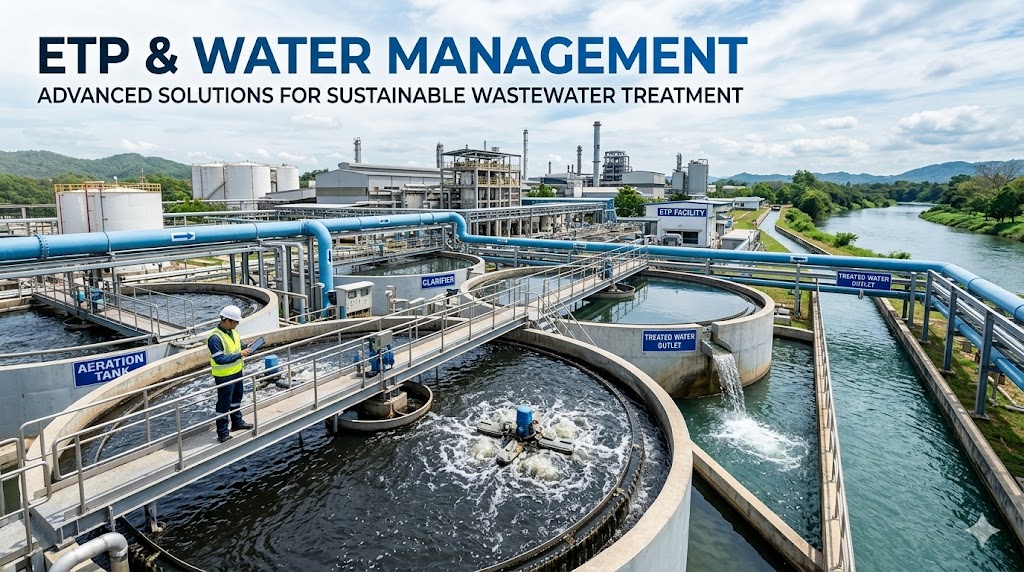
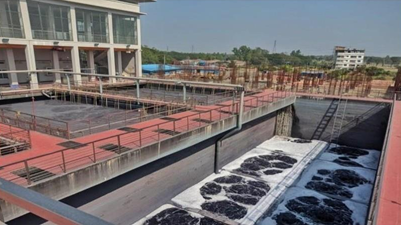
An Effluent Treatment Plant (ETP) encompasses the mechanisms and processes utilized to treat water that has been contaminated by commercial or industrial activities before it is released into the environment or reused. At FOUR H Dyeing & Printing Ltd., the facility operates an advanced ETP based on Membrane Bio-Reactor (MBR) technology developed by SUEZ.
MLD Effluent Treatment Plant
Key ETP Specifications:
The system is a 6 MLD (Million Liters per Day) ETP, operating with a 3-6 MLD MBR system.
It boasts a capacity of up to 6 million liters per day, which translates to 250 m3/hr running 24 hours a day, 365 days a year.
The total daily capacity is mathematically equivalent to 6,000 m3, or 6,000,000 liters.
Core Functional Components of the ETP:
Mechanical Screen: This component removes solid particles that are smaller than 2mm and has a capacity of 500 m3/hr.
Equalization Tank: This tank is used to thoroughly mix different types of effluent to produce a homogenous and equalized mixture, ensuring uniform treatment.
Cooling Tower: This step decreases the temperature of the effluent down to a standard level that is suitable for bacteria.
Bio-Reactor Tank: This tank decomposes pollutants through aerobic bio-reaction utilizing oxygen.
Membrane Tank: Ultra-filtration membranes are used here to separate the treated water from mixed liquor suspended solids.
Centrifuge: This machine is responsible for separating the water from the waste sludge.
The Role of the Water Treatment Plant (WTP)
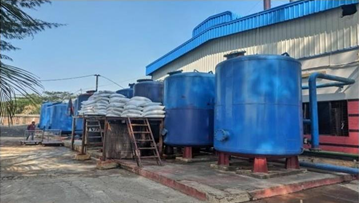
Water Treatment Plant Operations
Before water even reaches the dyeing machines, it must be properly treated. While there are multiple sources of water, such as surface water or rain water, deep well water is generally used in these facilities. The water processed here is referred to as “De-mineralized water”.
Primary Purposes of the WTP:
To remove hardness from the water and purify it.
To supply standard quality water directly to the dye house.
To supply safe water to the boilers and generators, ensuring the water does not cause damage to the equipment.
“Proper water management is the backbone of sustainable wet processing. Treating incoming water ensures that dyeing recipes react correctly and predictably, while effective effluent treatment ensures we protect the local ecosystems from chemical runoff.”
Advanced Filtration: The Reverse Osmosis (RO) Plant
For applications requiring extreme purity, the facility utilizes a Reverse Osmosis (RO) plant. Reverse Osmosis is a specialized process used to demineralize or deionize water by pushing it through a semi-permeable membrane.
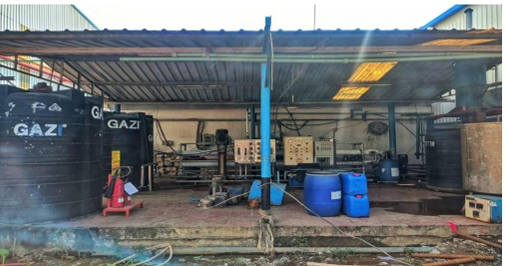
Reverse Osmosis (RO) Plant
RO Plant Capabilities
The FOUR H RO Plant has a capacity of 20 m3/hr.
The system provides a minimum filtration level of 20 microns.
The 20-micron filtration water is specifically designated for use in the boiler and generator systems to prevent scaling and improve efficiency.
Author’s Note:This post marks the final entry in my internship journey series. Exploring effluent treatment and water management highlights the urgent need for the industry to transition toward closed-loop systems and water-saving technologies. I look forward to taking the practical insights gained here and applying them to my ongoing focus on sustainable product development. Thank you for reading!