Textiles are everywhere, but how often do we actually think about the engineering behind what we wear? From ancient dyeing techniques to futuristic smart garments, the world of fabrics is packed with incredible science.
To kick off this blog, let’s look at four fascinating facts about textiles that prove there is a lot more to fabric than meets the eye!
1. Your Blue Jeans Are Faking It (Sort Of)
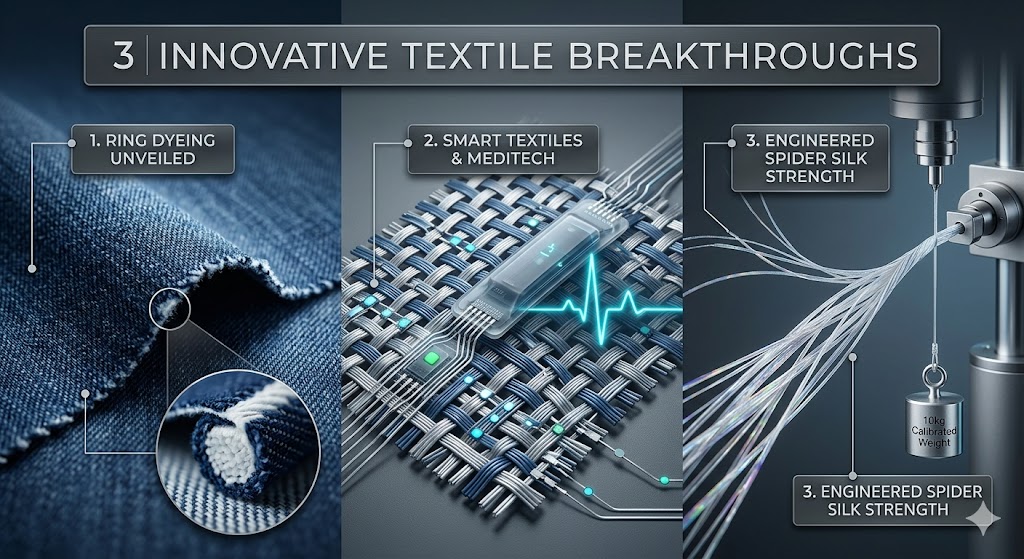
If you look closely at a pair of classic blue jeans, you’ll notice the inside of the fabric is mostly white. This is due to a fascinating process called ring dyeing.
Denim is traditionally dyed with indigo, but the dye molecules are too large to fully penetrate the cotton yarn. Instead, they only coat the outside “ring” of the yarn, leaving the core completely white. This is exactly why your favorite jeans fade and develop those unique, worn-in creases over time—the indigo surface slowly rubs off, revealing the white cotton underneath!
2. We Can Now Dye Clothes Without a Single Drop of Water
The traditional textile industry uses massive amounts of water to dye fabrics—sometimes up to 100 to 150 liters just to dye one kilogram of cloth. But sustainable engineering is changing the game.
New advanced methods, like D5 microemulsion and supercritical CO2 dyeing, allow us to dye fabrics flawlessly without using any water. These closed-loop systems dissolve dyes perfectly, driving them into the fibers, and then recycle the chemical agents for the next batch. It is a massive win for the environment and the future of sustainable fashion.
3. Your Clothes Could Soon Be Your Doctor
Forget bulky fitness trackers on your wrist—the future of health monitoring is Meditech and smart textiles.
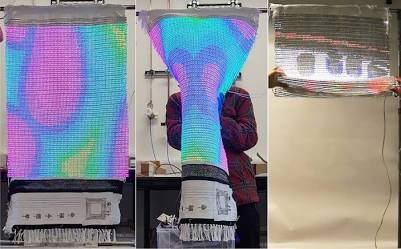
Engineers are currently developing fabrics woven with microscopic sensors and conductive threads that can monitor your vitals in real-time. These smart garments can track your heart rate, measure your body temperature, and even detect chemical changes in your sweat, all while feeling exactly like a normal, comfortable t-shirt.
4. Spider Silk is Stronger Than Steel
Spider silk is one of the most incredible materials found in nature. Pound-for-pound, it is actually stronger than steel and tougher than Kevlar, yet it remains incredibly lightweight and flexible.
While farming spiders is notoriously difficult (they are highly territorial), bio-engineers are working on ways to synthetically replicate spider silk proteins in the lab. In the near future, this ultra-durable fiber could be used for everything from high-performance activewear to advanced protective clothing.
Which of these facts surprised you the most? Let me know in the comments below, and stay tuned for more deep dives into the science, sustainability, and development of the textiles we use every day!