Welcome back to my internship journey series! For this installment, we are moving from the controlled, precision-driven environment of the Physical Testing labs and stepping onto the vibrant, massive production floor: The Dyeing and Printing Department at FOUR H Group.
As a textile engineer with a growing interest in sustainable processes—particularly waterless dyeing and eco-friendly fixation—observing the massive scale of traditional wet processing has been both awe-inspiring and educational. The Dyeing and Printing unit is where raw, greige fabric is transformed, taking on the brilliant colors and intricate patterns that will eventually reach the global retail market.
Dyeing Floor
1. The Heart of Color: The Dye House
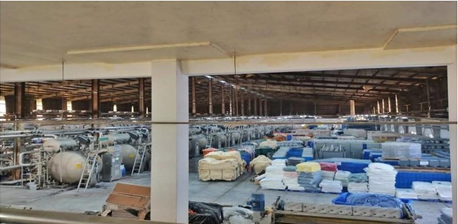
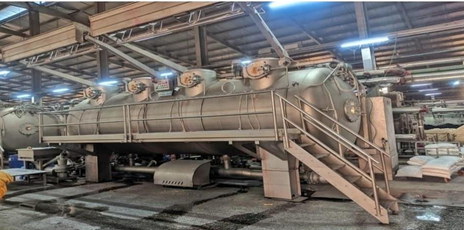
The dye house is arguably the most chemically intensive area of the factory. Here, large batches of fabric undergo scouring, bleaching, and dyeing. During my rotation, I observed the operation of high-temperature, high-pressure (HTHP) exhaust dyeing machines. These vessels are capable of handling hundreds of kilograms of fabric simultaneously, circulating both the fabric rope and the dye liquor to ensure perfectly level dyeing. Achieving the perfect shade requires rigorous control of parameters: pH, temperature gradients, salt and alkali concentrations, and precise cycle times. It’s a delicate balance of chemistry and thermodynamics to ensure the dye molecules migrate effectively and form durable bonds with the textile fibers.
Operating Interface of a Modern Dyeing Machine
2. Color Matching & The Lab Dip
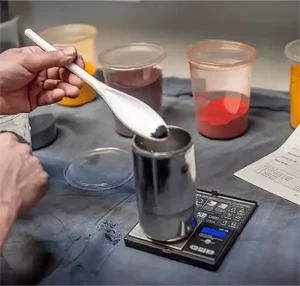
Before any fabric is dyed in bulk, the specific shade requested by the buyer must be developed in the color lab. This process results in a “lab dip.” Using spectrophotometers and automated dispensing systems, technicians create recipe variations. Once a lab dip is approved under standard lightboxes (evaluating for metamerism), the recipe is scaled up for bulk production.
Color Kitchen and Recipe Preparation Area
“Seeing the transition from a 10-gram lab sample to a 1,000-kilogram bulk batch highlights the immense importance of Right-First-Time (RFT) dyeing. Any deviation at the bulk stage results in significant resource waste—a challenge that continually drives my passion for researching more controlled, sustainable dyeing methods.”
3. Precision in Patterns: The Printing Floor
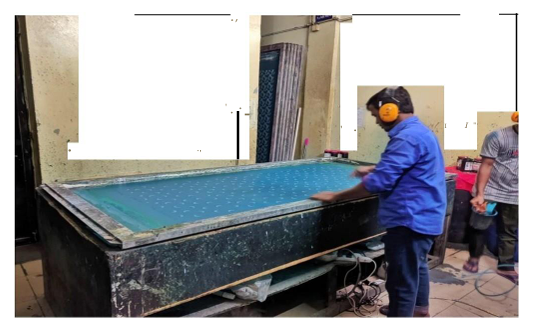
Adjacent to the dyeing area is the printing department, where solid colors are replaced by intricate designs. At FOUR H Group, I witnessed both rotary screen printing and specialized placement prints. Rotary screen printing is fascinating due to its continuous, high-speed nature. Each color in a design requires a separate perforated cylindrical screen. As the fabric moves continuously along a massive belt, printing paste is forced from inside the cylinders through the micro-mesh onto the fabric. Registration—ensuring all the separate colors align perfectly to form the final image—is critical and requires skilled operators.
Fabric alignment on the Rotary Screen Printing Machine
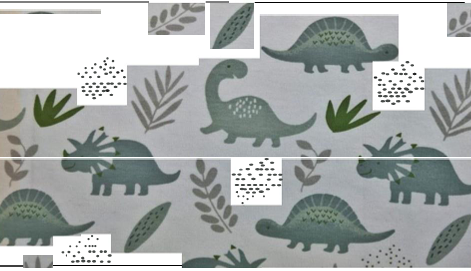
Pigment Printing: Printing is done by the use of pigments instead of dyes. The pigments do not penetrate the fabric but are affixed using binders. Pigments are insoluble in water.
Pigment Printing.
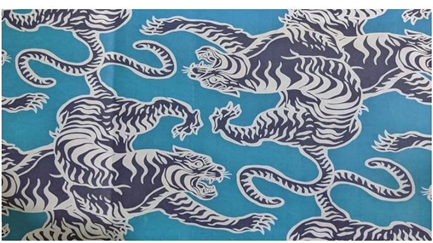
Discharge Printing
Discharge Printing: This is process is used to remove color from a dyed fabricin a desired pattern. A paste containing a chemical with a bleaching effect is applied through a printing process. There are 2 types of discharge printing-